
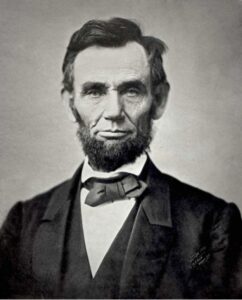
 On September 22, 1863, following the Union victory at the battle of Antietam, President Abraham Lincoln issued a preliminary version of the Emancipation Proclamation, giving the Confederacy a deadline to cease hostilities and rejoin the Union. On January 1, 1863, Abraham Lincoln signed the Emancipation Proclamation, an act that forever changed the course of the American Civil War. Although it is often remembered as the moment slavery ended in the United States, the Proclamation was something far more precise—and legally constrained.
Understanding what it did, and what it did not do, reveals how law, war, and constitutional authority intersected at one of the nation’s most critical moments.
A Wartime Executive Order, Not a Constitutional Abolition
The Emancipation Proclamation was issued as a wartime executive order, justified by Lincoln as “a fit and necessary war measure for suppressing said rebellion.” Its authority rested not in moral philosophy alone, but in the President’s powers as Commander-in-Chief during an armed conflict.
Legally, its reach was narrow by design.
- It applied only to states in active rebellion against the United States
- It excluded loyal border states such as Kentucky, Maryland, Missouri, and Delaware
- It did not apply to Confederate areas already under Union control
As a result, the Proclamation did not instantly free all enslaved people. Instead, freedom followed the advance of Union armies. Wherever federal troops went, the Proclamation carried legal force—and enslaved people who reached Union lines were permanently free.
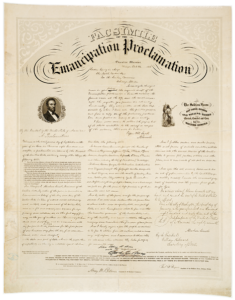 Changing the Nature of the War
While limited in scope, the Proclamation fundamentally transformed the conflict.
For the first time, the destruction of slavery became an explicit Union war aim. It also authorized the enlistment of Black men into the Union Army, leading nearly 200,000 African American soldiers and sailors to serve by the end of the war.
Strategically, emancipation weakened the Confederate war effort by undermining its labor system. Morally, it redefined the war as a struggle not merely for reunion, but for human liberty.
Resistance, Backlash, and Soldier Morale
The Emancipation Proclamation was not universally celebrated—even in the North. Many Union soldiers believed the war had shifted beneath their feet. Letters home reveal resentment rooted in racism, political divisions, and fear of social change.
Some soldiers openly stated they were willing to fight for the Union, but not for the freedom of enslaved people. Desertion rates rose, and morale suffered during the winter of 1862–1863.
Lincoln anticipated this reaction. His delay in issuing the Proclamation was not hesitation, but calculation—balancing military necessity against political reality.
What the Proclamation Could Not Do
Despite its importance, the Emancipation Proclamation had an inherent legal weakness: it rested entirely on wartime executive authority.
It did not:
- Permanently abolish slavery nationwide
- Amend the Constitution
- Prevent slavery from reemerging once the war ended
Lincoln understood that if slavery were to be eliminated as a legal institution, it would require constitutional action—not executive decree.
Why the Thirteenth Amendment Mattered
Slavery was formally abolished only with the ratification of the Thirteenth Amendment in 1865. Unlike the Emancipation Proclamation, the Amendment permanently prohibited slavery “within the United States, or any place subject to their jurisdiction.”
This distinction is critical. The Proclamation shows the limits of executive power. The Thirteenth Amendment demonstrates the enduring authority of constitutional law.
Together, they illustrate how meaningful legal change in America is achieved—not by a single stroke of the pen, but through lawful process, defined powers, and constitutional structure.
A Lesson in Law and History
The Emancipation Proclamation stands as one of the most consequential legal documents in American history—not just because it instantly, and temporarily, ended slavery in Union occupied territory, but also because it navigated the boundaries of presidential authority while pushing the nation toward constitutional transformation.
For lawyers and historians alike, it remains a powerful reminder that law matters most when it is tested under pressure.

