
Felony vs misdemeanor, Pennsylvania – understanding this distinction could be the most important thing you do after being charged with a crime. If you are navigating the criminal justice system for the first time, the legal terminology alone can feel like a foreign language. One of the most critical distinctions you will face immediately is whether the Commonwealth is charging you with a felony or a misdemeanor.
Many people mistakenly assume that a misdemeanor is simply a “slap on the wrist” or that only violent crimes result in felony charges. In reality, Pennsylvania law draws complex lines between these two classifications, often based on the specific circumstances of the alleged offense, the value of property involved, or a person’s prior criminal history. The label attached to your charge often dictates much of the process, from the amount of your bail to the potential length of a prison sentence.
Understanding the difference between a felony and a misdemeanor is the first step in building an effective defense strategy. Whether you are facing a minor infraction or a severe criminal allegation, the classification of your charge can significantly impact your freedom, your career, and your future. Let’s break down how Pennsylvania grades criminal offenses and what these distinctions actually mean for your life inside and outside the courtroom.
What Is a Felony Under Pennsylvania Law
A felony is the most serious classification of crime under Pennsylvania law. These charges are generally reserved for offenses that involve significant physical harm to others, high-value property crimes, or large-scale drug distribution.
Because of the severe nature of these crimes, felony convictions carry the harshest penalties. If you are convicted of a felony in Pennsylvania, you typically face the prospect of serving time in a state correctional institution rather than a local county jail. In addition to lengthy prison sentences that can span decades, felony convictions can carry massive financial fines and the potential loss of certain civil rights, such as firearm privileges and voting rights, while incarcerated.
What Is a Misdemeanor Under Pennsylvania Law
A misdemeanor is a lesser offense compared to a felony, but it is still a formal criminal charge that generally carries the weight of a permanent criminal record. Misdemeanors typically encompass non-violent crimes, lower-level property offenses, and certain driving offenses like a first-time DUI.
While the penalties are often less severe than those for a felony, misdemeanors should never be taken lightly. A conviction can still result in a significant jail sentence, usually served in a county prison. Furthermore, the collateral consequences of a misdemeanor conviction can quietly disrupt your personal and professional life for years after your sentence is completed.
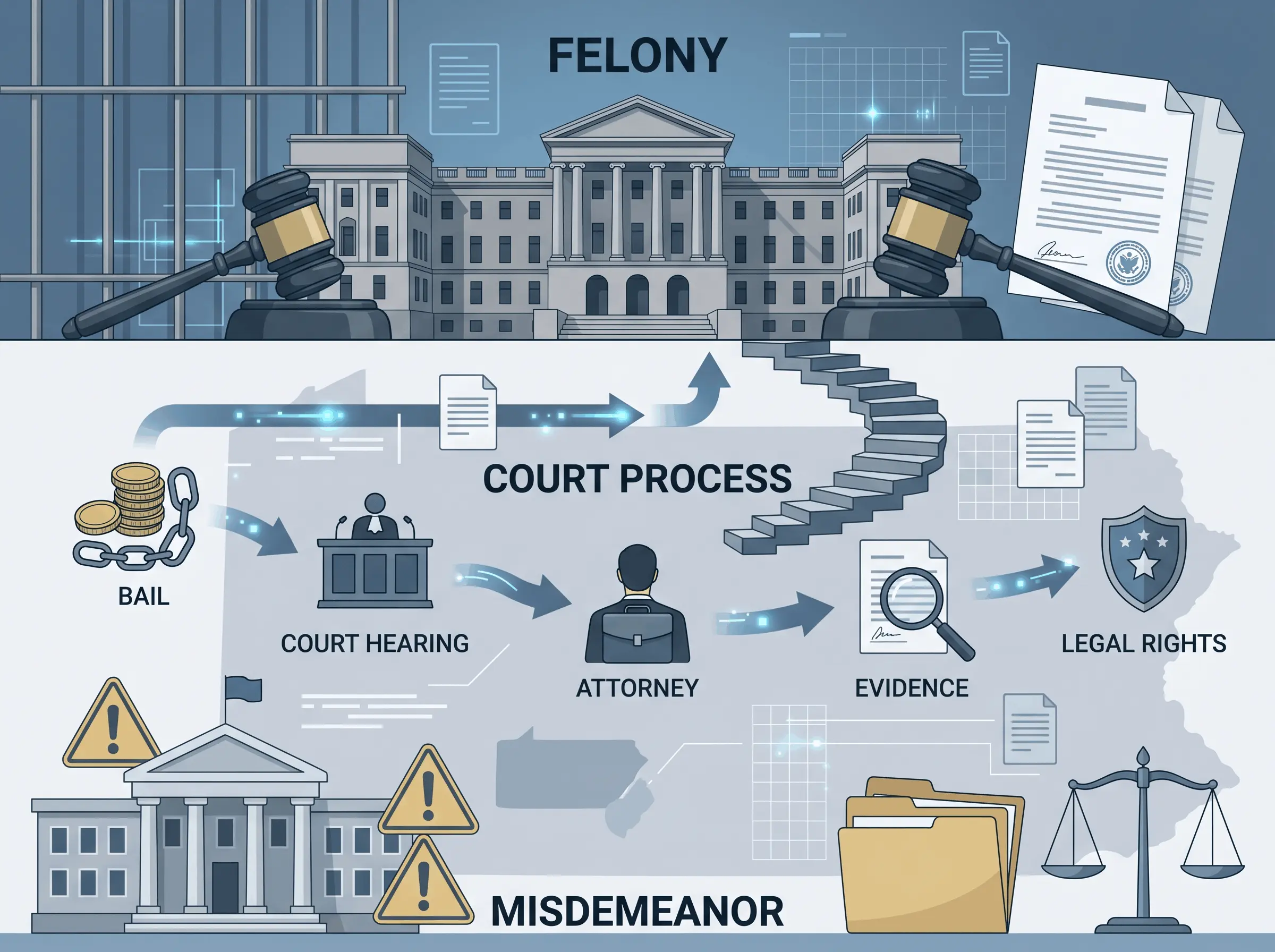
How Pennsylvania Grades Criminal Charges
Within the broad categories of felonies and misdemeanors, Pennsylvania utilizes a specific grading system. The severity of the potential penalty depends heavily on the “degree” of the charge.
Felony Grades: First, Second, and Third Degree
Felonies are broken down into three primary degrees, along with unclassified felonies (such as murder) that carry even stricter sentences. The standard statutory maximums for felonies include:
- First-Degree Felony (F1): The most serious standard grade. Punishable by up to 20 years in state prison and up to a $25,000 fine. Examples may include certain rape offenses, aggravated assault, and arson, depending on the circumstances.
- Second-Degree Felony (F2): Punishable by up to 10 years in state prison and up to a $25,000 fine. Examples can include certain types of burglary (such as when no one is present) and specific statutory sexual assault charges.
- Third-Degree Felony (F3): Punishable by up to 7 years in state prison and up to a $15,000 fine. Examples may include carrying a firearm without a license and specific drug possession with intent to deliver offenses.
Misdemeanor Grades: First, Second, and Third Degree
Misdemeanors are similarly structured into three degrees, with penalties that escalate based on the severity of the offense:
- First-Degree Misdemeanor (M1): The most serious misdemeanor grade. Punishable by up to 5 years in prison and up to a $10,000 fine. Examples may include multiple DUI offenses and specific cases of simple assault.
- Second-Degree Misdemeanor (M2): Punishable by up to 2 years in prison and up to a $5,000 fine. Examples can include certain types of simple assault, resisting arrest, and retail theft of specific values.
- Third-Degree Misdemeanor (M3): Punishable by up to 1 year in prison and up to a $2,500 fine. Examples often include disorderly conduct, loitering, and lower-level retail theft offenses.
The Real-World Consequences of a Felony vs. Misdemeanor Conviction
Beyond the statutory maximum sentences, the classification of your charge dictates how the justice system treats you throughout the entire process.
The differences often manifest in several key areas:
- Incarceration Location: Felony sentences are typically served in state prisons, whereas misdemeanor sentences are generally served in county jails.
- Loss of Civil Rights: A felony conviction can restrict your ability to own, possess, or carry a firearm under state and federal law. You may also lose your right to vote during periods of incarceration.
- Bail Amounts: Judges typically set significantly higher bail amounts for felony charges, which can make it more difficult to secure your release pending trial.
- Probation Terms: Felony probation periods are often longer and can come with stricter supervisory conditions than misdemeanor probation.
How a Criminal Charge Affects Your Life Beyond the Courtroom
The damage from a criminal conviction can extend far beyond fines and jail time. These “collateral consequences” can create lasting roadblocks in your everyday life.
Employment and Background Checks
In today’s digital age, almost every employer conducts a background check. A criminal record can severely impact your career progression:
- Felony Disqualifications: A felony conviction is a major red flag that may automatically disqualify you from certain career paths, particularly in finance, security, and government sectors.
- Misdemeanor Roadblocks: However, even a misdemeanor can cost you a job opportunity, especially if the charge relates directly to the field you are applying for (such as a theft misdemeanor for a retail job, or a DUI for a position requiring driving).
Housing, Loans, and Professional Licenses
A criminal record can create significant barriers in other critical areas of your life as well:
- Housing Restrictions: A criminal record can significantly narrow your living options, as many landlords enforce strict policies against renting to individuals with felony convictions.
- Student Loan Eligibility: Furthermore, certain drug-related convictions may impact your eligibility to receive federal student loans.
- Professional License Revocations: If you hold a professional state license – such as a nurse, teacher, real estate agent, or lawyer – both felony and misdemeanor convictions can trigger disciplinary board reviews, suspensions, or revocations depending on the circumstances.
Can a Felony Be Reduced to a Misdemeanor in Pennsylvania
Understanding the felony vs misdemeanor Pennsylvania grading system is essential when exploring your options for charge reduction. Yes. It is often possible for a felony charge to be reduced to a misdemeanor before your case goes to trial. This reduction is not automatic, but an experienced Pennsylvania criminal defense attorney can often negotiate with the prosecution to lower the grading of the charges.
This is typically achieved by conducting an independent investigation, exposing weaknesses in the prosecution’s evidence, or demonstrating that the facts of the case do not meet the legal threshold required for a felony conviction. Securing a charge reduction can profoundly alter the trajectory of your case and your future.
Common Mistakes People Make When Facing Criminal Charges
When facing the criminal justice system, panic can cause individuals to make decisions that inadvertently harm their case. To protect your rights, you should generally avoid these frequent errors:
- Trying to explain your way out: Speaking to the police without legal representation is highly risky. Even innocent statements can be misinterpreted and used to build a case against you.
- Assuming a misdemeanor is not a big deal: Pleading guilty to a misdemeanor just to “get it over with” can result in a permanent criminal record and unforeseen collateral consequences.
- Posting about the case online: Discussing your situation on social media can provide prosecutors with a public record of your statements.
- Waiting to hire an attorney: Delaying legal representation can give the prosecution a head start in building their case against you.
Steps to Take If You Have Been Charged in Pennsylvania
To safeguard your freedom and start building a strategic defense, you should consider taking the following steps the moment you realize you are facing PA criminal charges:
- Exercise your right to remain silent: Politely inform law enforcement that you will not answer questions without your attorney present.
- Retain legal counsel immediately: Hire a qualified defense attorney as early in the process as possible, ideally before your preliminary hearing.
- Preserve all evidence: Back up text messages, emails, and any potential digital evidence that could support your defense.
- Comply with bail conditions: If you are released on bail, strictly follow all conditions set by the judge to avoid having your bail revoked.
How Penglase & Benson Can Help
At Penglase & Benson, we understand that facing PA criminal charges is a highly stressful and uncertain experience. Whether you are dealing with a misdemeanor or a serious felony, your future is on the line, and you need a legal team that will stand between you and the prosecution.
Our attorneys focus on developing customized legal strategies designed to protect your rights and minimize the impact of criminal charges. We will carefully review the specific details of your case, challenge the prosecution’s evidence, and work strategically to negotiate charge reductions or seek a dismissal whenever possible.
Visit our Contact Page to send us a message and schedule your free consultation today.
Frequently Asked Questions
Will a misdemeanor go on my criminal record in PA?
Yes, a misdemeanor conviction generally results in a permanent criminal record. However, under Pennsylvania’s Clean Slate law and specific expungement rules, certain non-violent misdemeanors may eventually be eligible to be sealed from public view after a designated period of time without further criminal convictions.
Can I own a gun if I have a misdemeanor conviction?
In many cases, a standard misdemeanor conviction will not necessarily impact your firearm rights. However, certain misdemeanors – specifically first-degree misdemeanors or those related to domestic violence – can trigger strict state and federal bans on owning or possessing a firearm.
Is it possible to go to jail for a first-time misdemeanor?
Yes, it is possible. While judges often consider probation, fines, or pretrial diversion programs (like ARD) for first-time offenders, jail time remains a potential statutory penalty. The likelihood of incarceration depends heavily on the specific charge, the grading of the misdemeanor, and the circumstances surrounding the event.
Do I need a lawyer for a misdemeanor charge?
Yes. Because a misdemeanor carries the threat of jail time and results in a criminal record that may remain visible for years with significant collateral consequences, navigating the court system alone is not advisable. Legal counsel can evaluate the evidence against you and work to secure a more favorable outcome.
Can a felony charge be expunged in Pennsylvania?
In most cases, felony convictions cannot be expunged under Pennsylvania law unless a pardon is granted by the Governor, which is typically a rare and lengthy process. However, if you were charged with a felony but the charges were ultimately dismissed, or you were found not guilty, the record of the arrest may be eligible for expungement.

